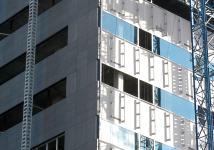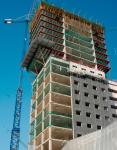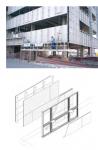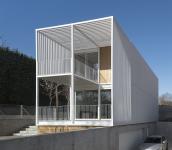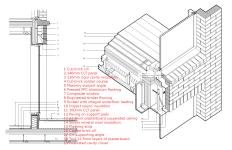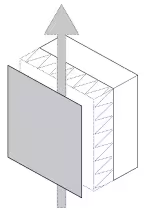
Watertightness is achieved by means of a drained cavity created by placing an open-joint cladding at a distance from the support element on its external side. This solution encompasses all façade that incorporate a drained cavity, whatever is the support element made of. Especially typified solutions are those in which the support element is made of either brickwork or concrete with an insulation layer over its outer face (a rainscreen with a heavy inner layer); or those with a post and rail structure of simple profiles as a support for the inner layer (a rainscreen with a light inner layer). As it happens with the ETICS solution, from the functional point of view, the most relevant differences between these two variants are: - the lack of mass that affects acoustics and thermal inertia; - the possible air leaking when using dry construction.
Rainscreen - over amorphous and small elements
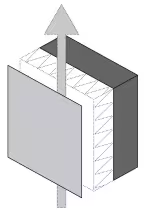
Rain screen solutions over amorphous and small elements supporting element are, by definition, heavy solutions. Therefore those solutions have thermal inertia and a good acoustic performance when regarding air transmission. Airtightness is solved just by the natural conformation of the inner wall. Wet construction systems, where pastes fill any joint, have airtightness implicit.
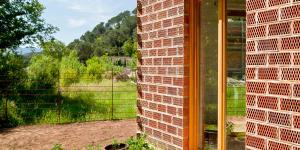



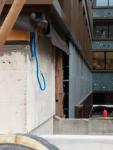
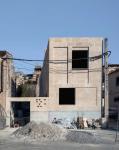
Rainscreen - over semi-finished products in the inner layer
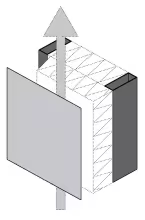
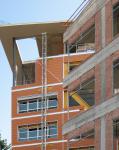
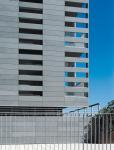
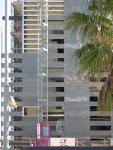
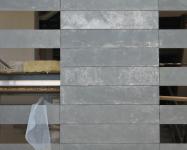
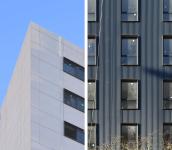
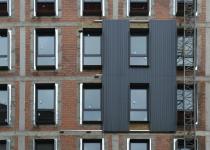
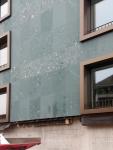
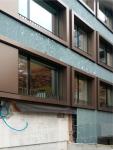
Rain screen solutions over semi-finished products supporting elements are, in general, light weight solutions; therefore have low thermal inertia and need designing an elaborated wall section by the addition of layers so as to achieve a good acoustic performance. They also need special care when considering airtightness. Dry construction is more likely to have air leaking than the wet one. The perfect sealing of the joints plus the protection from humidity of the boards conforming the supporting elements justify the addition of a specific membrane that prevents air and moisture infiltration.
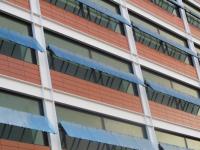

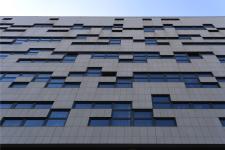

Rainscreen - over semi-finished products in the outer layer
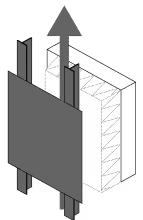
Rain screen solutions over semi-finished products supporting elements placed in the outer layer need dimensioning this structure considering as span the distance between slabs. The inner layer is exempted from supporting wind loads except in those cases of pressure equalized cavities.


Rainscreen - over components
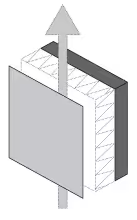
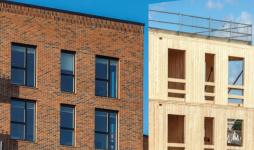
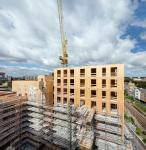
Rain screen solutions over components supporting element may lead to consider the outer layer and the cavity unnecessary. If this component is watertight, and taking into account that the joints between components must be sealed to grant airtightness, the inner layer can easily be enough to give the needed air and water tightness to the facade. The outer layer and the drained cavity make sense only when the inner layer material cannot support the effect of direct water. That is the case of wood –CLT or wooden boards-. On those cases the outer layer and the cavity stop direct water but cannot stop steam. An added steam barrier is needed to protect those materials.